

This is Chris Ford

By Jennifer Ersalesi

Rutherford resident, Chris Ford, has been a wrestler for thirty-five years, physical therapist for twenty-eight years, and owner of a local physical therapy business for fourteen years. His high school athletic injuries peaked his interest in his full-time career and enabled him to continue wrestling while also helping fellow wrestlers and athletes. He recently found out about a special honor he will receive to celebrate his wrestling career. This is Rutherford interviewed Chris to learn more about both of his careers, the honor he will receive, his family, and what it is like living in his hometown.
TIR: When do you remember first becoming interested in wrestling?
Chris Ford: My first memories of wrestling
are watching it with my dad and my brother Ernie. We'd watch wrestling at night on Channel 9, and I was instantly captivated by Randy “Macho Man” Savage, Jimmy “Superfly” Snuka, Hulk Hogan—I was hooked immediately. As I got older, my interest in wrestling just continued to grow until eventually watching it wasn't enough. I HAD to find a way to actually do it.
Long before I ever started wrestling school, I would daydream about becoming a professional wrestler. I was a junior in high school when I finally decided I was going to give it a shot.
There was actually a funny precursor to all of this. The first time I ever stepped into a wrestling ring wasn't technically a professional wrestling match—it was for a Jell-O wrestling fundraiser at Rutherford High School. Obviously, that wasn't the start of my professional career, but it's pretty funny to look back now and realize that my first experience inside a wrestling ring happened right here in Rutherford.
Unfortunately, although I really wanted to - I never got the opportunity to wrestle for Rutherford High School. I had blown out both of my knees / tore both ACLs playing football, and because I had to wear large knee braces, amateur wrestling really wasn't an option for me. Looking back those knee injuries were a blessing in disguise and ended up shaping the rest of my life in a way I never could have anticipated. Those injuries made me need to go through a lot of physical therapy, and that’s when I began to think, “I really like this - maybe this is what I want to do.” – and as they say “the rest is history”
In the summer of 1990, I started working Fridays, Saturdays and Sundays as a busboy at the old Landmark Catering Hall. I'd work double shifts whenever I could because I was saving every dollar I could to pay for wrestling school. Then, in 1991, I started training at Iron Mike Sharpe's wrestling school in Bricktown, New Jersey. Stepping into a REAL pro wrestling ring was an incredible and surreal experience – I’ll never forget it. I'd make the trip down there three nights a week. I'd often get home around 1:00 in the morning and then have to get up and go to school the next day. Believe me, there was a lot of coffee involved! But I was loving what I was doing so the long drives, late nights, school the next morning and working all weekend didn't matter to me.
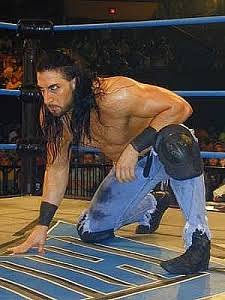
TIR: Your career started in 1991, with the name Devon Storm. Why did you choose that name? What were some of the highlights of your career as Devon Storm?
CF: Devon Storm actually came to me before I ever wrestled. Long before I went to wrestling school, when I was a teenager daydreaming about becoming a professional wrestler, I'd imagine myself as a wrestler and that name just popped into my head. I knew someone who lived in Devon, Pennsylvania, and I'd always liked the name Storm. At some point, I put the two together: Devon Storm. It just sounded like a wrestling name to me, and it stuck. So by the time I actually started training, I already had a name.
People from Rutherford also became part of the Devon Storm journey. Maria Guzman-Weisbecker, a Rutherford seamstress and dressmaker, made my ring gear during my early days as Devon Storm. My good friend Rocco Mazza, who I met when he was substituting at Rutherford High School, became instrumental in my career. He eventually decided to train at the wrestling school and became my ringside manager, as “The Master,” a devious and evil “bad guy” manager during the early days of my career. He helped me with so many aspects of my professional wrestling career beyond being my ringside manager character – it’s impossible to list them all - I've always said, if it wasn't for Rocco, there never would have been a Crowbar. He’s an amazing person who I will be eternally grateful to.
There were plenty of people who thought I was crazy for pursuing professional wrestling, especially while also pursuing a demanding academic curriculum in physical therapy. I was traveling hundreds of miles on weekends to wrestle independent shows while going to school during the week. There were lots of doubters and looking back I guess it DID seem like a crazy idea to pursue both – so how could I blame them.
The early days of Devon Storm were hectic and nuts. This was before online classes were a thing, so balancing the two took a lot of planning and sacrifice. When I had to fly out for television tapings while I was still in PT school, I'd speak with my professors, get assignments done ahead of time and arrange everything so I could make my wrestling commitments without falling behind. I would be studying in the locker room when it wasn't my match. When the show was over, instead of going out with everyone, I'd go back to the hotel room and study or work on assignments.
While I was still a college and PT student, I had the opportunity to wrestle for WWE, ECW and WCW on a nightly basis and be around some of the biggest names in the business.
So when I look back at Devon Storm, I don't just think about the matches. I think about that period of my life when I was trying to build two careers at the same time—and somehow make both of them work.
TIR: In 1999, your wrestling name became "Crowbar". Where did that name come from?
CF: Crowbar was actually an idea of WCW's head of creative, Vince Russo. I'd been wrestling as Devon Storm on WCW Saturday Night on TBS - (WCW’s “B” show), but after a few months Vince came up with a really unique idea for bringing me onto the main roster and giving the character a bigger platform. The idea was to put me into a tag team with David Flair, the son of the legendary Ric Flair. That gave WCW a storyline and a way to introduce this completely different character, and that's where Crowbar was born.
It was my opportunity to move from WCW Saturday Night, the “B” show, onto WCW's prime-time weekly shows, Nitro and Thunder, on TNT and TBS. Suddenly I was working alongside David Flair and getting the opportunity to work with many of the biggest names in WCW.
After only two weeks as Crowbar, David and I won the WCW World Tag Team Championship.
That was obviously a huge highlight for me. To go from wrestling as Devon Storm on Saturday Night to becoming Crowbar, moving onto the main shows and eventually holding the tag team titles was a pretty incredible progression. And the funny thing is, when the character was created, I don't think any of us knew that “Crowbar” would stick with me for the next 25-plus years. But it did.
At this point, I think I'm probably better known as Crowbar than I ever was as Devon Storm.
After WCW was acquired by WWE, there was a lot of talk among wrestling fans and in the wrestling media that Crowbar would be a natural fit for WWE. The in-ring style, the crazy bumps and the unhinged, wild-and-crazy character seemed like a pretty good fit for the wild and crazy WWE Attitude Era. I actually had several dark matches for WWE and got some really good reactions, but ultimately nothing full time was ever offered.
Looking back now, it's clearer than ever to me that things worked out exactly the way they were supposed to. If I had gotten signed by WWE full-time, I probably never would have met my wife, Dina (also a wrestler) who I met at in independent wrestling event in Delaware after WCW ended. So wrestling didn't just give me a career—it gave me the love of my life. I don't mean that to sound preachy, but I really believe God has a plan. At the time, after WCW ended -not getting that WWE contract was disappointing. Looking back, though, I can say without reservation that me not getting signed was the best thing to never happen to me. I didn't get the WWE contract I thought I wanted, but I got something infinitely more important—I got my wife and eventually my two incredible children.
TIR: You won so many matches during your WCW career. To what do you attribute your success?
CF: I think my success and longevity have a lot to do with preparation, discipline and taking care of myself. During my time in WCW, I was fortunate enough to hold three titles—the WCW World Tag Team Championship, the WCW Hardcore Championship and the WCW Cruiserweight Championship. I'm very proud of those championships, but for me, success in wrestling has never been just about the titles or the wins.
Obviously, we all know professional wrestling is entertainment and the outcomes of the matches are predetermined. But what isn't predetermined is what it takes to actually perform those matches. When you're wrestling night after night, traveling from city to city and working on the road, it takes a tremendous amount of physical preparation to consistently perform at a high level.
You have to train, stay in shape, understand your body and learn how to manage the wear and tear that comes with the business. And when you've been doing it for decades, you learn that preventing a small injury from becoming a major one can be just as important as how you train.
My physical therapy background has definitely helped me with that. I've learned how to recognize when something needs attention, how to manage injuries and how to train in a way that allows me to keep performing without unnecessarily putting myself in a position to get hurt. That experience eventually came full circle. Today I own Raising the Bar Physical Therapy, and we've had the opportunity to help wrestlers, professional athletes, and other active people recover from injuries and get back to doing what they love.
I think being both a wrestler and a physical therapist gives me a perspective that I wouldn't have had from either career alone. For me, the combination of preparation, experience, physical therapy knowledge and simply loving what I do has allowed me to keep going for more than 30 years.
TIR: You found out recently that you will be inducted into the Indie Wrestling Hall of Fame at an event celebrating 20 years of American professional wrestler, Joey Janela's career. How are you feeling about this honor?
CF: It was incredibly humbling, especially because the induction was a complete surprise.
I had no idea what was happening. I had just finished my match on August 6 at the GCW show when Joey came into the ring carrying the award and announced that I was being inducted into the Indie Wrestling Hall of Fame. To have that happen immediately after wrestling, in front of everyone, was an incredible moment. What's made it even more meaningful is my history with Joey.
I first wrestled him back in 2014. At that point, I was actually contemplating retiring from wrestling. Then we had this absolutely wild match, and something about that night reignited my enthusiasm for wrestling. It reminded me how much I still loved doing this, and I've been going ever since.
Our relationship eventually evolved beyond wrestling as well. Through my physical therapy practice, I've had the opportunity to help Joey rehab from some very serious injuries, including a significant knee injury and a biceps rupture. He was able to return to action far ahead of what was expected after both injuries, which was incredibly rewarding for me to see. So there was something really special about Joey being the person who surprised me with the induction.
Think about the full circle of it: I wrestled Joey at a time when I was considering walking away from wrestling, that match helped reinvigorate my career, I later helped him return from major injuries, and now he's the one standing in the ring inducting me into the Hall of Fame. It's pretty hard to write a better story than that.
I've also had my own physical challenges along the way. I have two total knee replacements, and I've been wrestling with them for more than 11 years. I've continued to run, jump, take bumps and do things that probably aren't what most people would expect someone with two knee replacements to be doing. My surgeon is actually amazed at what I've been able to continue doing. So when I think about this honor, I don't just think about the matches or championships. I think about the entire journey—the injuries, the comebacks, the people I've met, the people I've been fortunate enough to help, and the fact that after more than 30 years, I'm still able to walk into a ring and do what I love. And to have Joey Janela be the person standing in that ring with the award, completely catching me off guard, made the whole thing even more special.
TIR: Who have been your mentors as a wrestler?
CF: There have been so many legends and great wrestlers who I've had the opportunity to learn from throughout my career. I really couldn't name them all, and honestly, I wouldn't want to leave anyone out. I've been fortunate enough to work with some incredible people.
In wrestling, you can learn something from almost everybody you work with, whether they're a major star, a veteran who's been around for decades or somebody who's just starting out.
And honestly, I've even learned things from wrestlers who had less experience than I did.
Everyone has their own experiences, abilities and way of looking at things. If you pay attention and actually absorb what the people around you are doing, you'll find that you can learn something from almost anyone.
Some people taught me about wrestling itself. Others taught me about professionalism, dealing with the business, taking care of myself or how to conduct myself backstage.
A lot of what you learn in wrestling isn't necessarily something somebody sits you down and teaches you. Sometimes it's watching how another wrestler prepares, how they conduct themselves, how they work with their opponent or how they handle a difficult situation.
After more than 30 years, I think one of the biggest lessons I've learned is that you never really stop learning. There is always somebody who can teach you something and because there are so many of them, I'd rather not start listing names and accidentally leave somebody out. I'm grateful to all of them.

TIR: What have you enjoyed most about wrestling all these years?
CF: There are so many things—the people, the relationships, the experiences and the places wrestling has taken me. I've gotten to see parts of the country and the world that I probably never would have seen otherwise. I've had the unbelievable opportunity to meet and wrestle against many of the heroes and villains I grew up watching on television.
Every once in a while, I'll stop and think, “Wow... I actually shared a locker room and wrestled on the same show with Hulk Hogan, Ric Flair and Randy Savage” – superstars that I watched as a child and teenager.
I've also wrestled Terry Funk at Starrcade, WCW's biggest event. Terry was one of my favorite wrestlers when I was a teenager, back when I was still just dreaming about becoming a wrestler myself. So to eventually find myself standing across the ring from him at Starrcade (WCW's version of WrestleMania) and wrestling in a title match on that event was pretty surreal. When I watch the match to this day, sometimes I can't believe it actually happened.
Then there's Madison Square Garden. As a teenager, I went to many wrestling cards at MSG with Rocco who I mentioned earlier. So to go from sitting in the stands at Madison Square Garden as a teenager watching wrestling with Rocco, to eventually walking into that same building as a professional wrestler and performing there for WWE—with Rocco watching in the crowd—was an incredible full-circle moment. But honestly, I think NOW may be the most fun I've ever had wrestling because it's purely for fun and the love of the game.
When I was younger, there was always pressure. You were trying to get noticed, trying to get to the next level, trying to get a contract, trying to keep your spot. There was always something you were trying to accomplish. Now, I don't have that pressure anymore everything is for the love of the game. I do it because I choose to. I do it because I want to. And most importantly, I do it because I absolutely love it.
I wrestled for AEW in April of 2025 at 51 years old, and I was able to just go out there and enjoy the moment and the experience. I was invited to come wrestle, I had a great time, and I got to perform in front of a large audience for a major television company without worrying about earning a spot or getting a regular job.

The most incredible part to me is 21 years performing together, I'm still performing with my wife, Dina, who manages me at ringside. It's something we both genuinely enjoy. We're both still able to do it, and we have a lot of fun with it. We come up with ideas together—spots, entrances, her outfits, different things we can do creatively. It's become something we share. Now our kids get to sit in the audience and watch us do it together. There's something really special about that. They get to see their parents doing something that we both genuinely love.
Wrestling also motivates both of us to take care of ourselves. We eat right, we stay in shape and we try to keep ourselves physically prepared because we know we want to continue doing this. People sometimes think I'm nuts for still wrestling. They can't understand how I'm able to continue doing the things I'm doing at this point in my life, especially with two total knee replacements. People ask me how I can go into a match without being afraid.
The truth is, I pray to Jesus before every match. I put it in His hands, walk through that curtain and do what I love. I don't go out there thinking about what could go wrong. I go out there without fear and enjoy the moment.
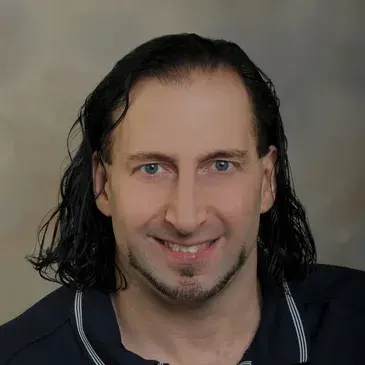
I've also been fortunate enough to take the experience I've gained through wrestling and physical therapy and use it to help other wrestlers and professional athletes. Through Raising the Bar Physical Therapy, we've helped athletes work their way back from serious injuries and get back to doing what they love. So I've gone from being the guy sitting in the locker room trying to figure out how to get through an injury to being the guy helping other athletes get back in the ring or back on the field. I never really had to leave one world to enter the other. That's also something I've tried to pass along to my own kids.
My son is starting to show an interest in professional wrestling, and he's actually a better athlete and in better shape than I was at his age. My daughter is an excellent actress and singer and loves theater. I'm incredibly proud of both of them, and I want them to pursue whatever they're passionate about. I've taught them the same thing I learned early in life: chase your dreams, but pursue them responsibly and but make sure you can take care of yourself along the way. If they want to pursue wrestling, acting, singing or anything else, I'll encourage them to give it everything they've got—but I'll also encourage them to have a solid plan for their future.
Sometimes the dream works out exactly the way you hoped. Sometimes it doesn't.
That's just life – be prepared just in case things don’t work out – sometimes the stars don’t align the way you hoped they would. Having another career doesn't mean you're giving up on the dream. It means you're giving yourself the freedom to pursue it responsibly. Honestly, I feel incredibly thankful and blessed to Jesus that I'm still able to do this crazy thing that I love doing, with the love of my life, while our kids watch us from the audience.
After more than 30 years, I'm just grateful that I still get to do this crazy thing that I love doing—with my wife.
TIR: You are a lifelong Rutherford resident. What do you love most about living in this town?
CF: I've spent my entire life in Rutherford, so it's not just where I live—it's home.
Even when I lived in Wood-Ridge after Dina and I got married, Rutherford was still my community. That's where we did everything and where I spent so much of my time.
What's really special to me is that I still see people who I grew up with. I see guys I played football with and went to school with. I see kids I watched wrestling with at my house when we were growing up.
Some of those same people I've actually had the opportunity to work with as patients through physical therapy. I've treated former teachers, old friends and even some of my friends' moms—people I remember seeing when I'd go over to their houses as a kid.
There are also some pretty amazing full-circle moments when I think about my wrestling career and Rutherford.
I've had the opportunity to wrestle at Rutherford High School, St. Mary's High School, the Williams Center, and Felician University—all right here in the community where I grew up.
To go from being a teenager dreaming about becoming a professional wrestler to eventually performing in my own hometown at places that are such a familiar part of my life is pretty special.
There's something really cool about knowing that so many parts of my life—my childhood, wrestling, my friendships, my career and my family—are connected to this town. Rutherford has also been a great place to raise my own kids. I love watching them enjoy many of the same places that I enjoyed when I was growing up here. I still go for walks at Memorial Field. I love all the restaurants on the Avenue. I know the town, I know the people, and there's just a familiarity and a sense of community here that I really appreciate.
I've been fortunate enough to travel all over because of wrestling, but I've always come back to Rutherford. I've been able to build my family, my career and my physical therapy practice here. It's just a great place to live. I think that's probably what I love most about Rutherford. It has changed over the years, as every town does, but it still feels like home.
I can walk around town and run into somebody I've known for 30 or 40 years, and that's something you don't necessarily find everywhere.
So after everything wrestling has taken me through, and all the places I've been lucky enough to see, I'm still a Rutherford guy. This is home.


Comments